The Drawer My Mother Slept In
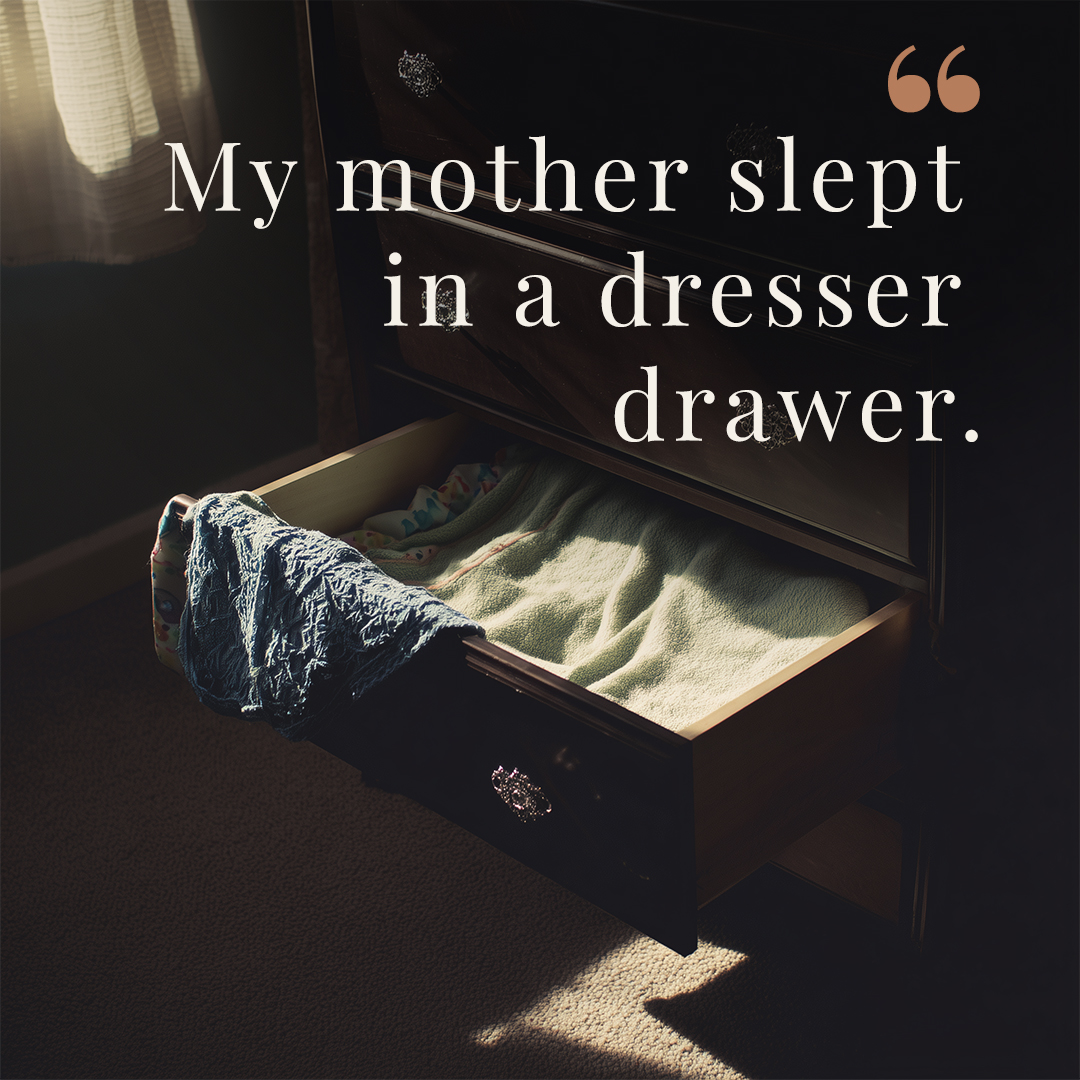
When my mother was born, my grandparents had nowhere to go. They were seventeen. They moved in with my great-grandmother, who pulled a drawer out of the bureau, lined it with clothes, and laid a newborn baby inside it.
That was my mother's crib. A dresser drawer in a house that barely had room for the people already in it.
My mother almost didn't make it home at all. While my grandmother Diane was in the hospital, a priest and her family pressured her to sign adoption papers and give the baby up. My grandfather got on a payphone and told her: "Don't sign nothing." She didn't. That's why my mother exists.
I didn't learn most of this until I was in my thirties, sitting across from my grandfather with a recorder running between us. He told it plainly, like it was just what happened. Because it was.
The forgotten people
My grandfather was Norman William Young. Algonquin. Wolf Lake First Nation. Born in 1946 in Tee Lake, Quebec. He didn't receive his official Status paperwork from the Canadian government until 1986. He was forty years old before the country acknowledged what he already knew about himself.
He called his people "the forgotten people." Not Indian enough for the government. Not white enough for their neighbors. Caught in the gap between two worlds that both pretended they didn't exist.
When he was a boy, he'd sit outside the CV store while his parents bought groceries and watch grown men sign a piece of paper that said "today, I am not an Indian" just to walk into an establishment. That was the deal. Sign away who you are, or you don't get in. His father carried the groceries home with a tump line, a leather strap across his forehead, because they didn't have a car.
Norman watched the government try to erase his people and spent his whole life fighting to get it back.
Sawmill worker, mill operator, twelve years as an Indigenous Relations Advisor at Tembec, twelve years on Temiscaming town council. Vice President of the Laurentian Alliance of Metis and Non-Status Indians. Grand Chief of the Algonquin Nation Tribal Council. Mayor of Kipawa. The first Indigenous person in Quebec history to hold Mayor and Grand Chief at the same time.
He was awarded the Queen's Diamond Jubilee Medal, one of Canada's highest civilian honors. The white mayors got invited to a ceremony. Norman's medal arrived in the mail. In an envelope.
Because of his work and the work of others like him, I received my own Status card from the Canadian government in my early thirties. Without what he fought for, I would have never gotten it.
Near the end, he said it plainly: "Tired of fighting."
The grandson with the recorder
I sat down with my grandfather because I wanted to capture his life. I had a recorder, a list of things I wanted to ask him, and the kind of love that makes you believe wanting to hear the story is enough to capture it.
It wasn't.
Norman would say something in passing, a name, a place, a half-sentence about something that happened decades ago, and I'd feel the weight of it but not know what to ask next. By the time I thought of the right question, he'd moved on. Or I'd get emotional and lose the thread. Or I'd freeze because I didn't want to push him somewhere painful.
I'd leave those sessions and replay them in my head. Not the things he told me. The things I didn't follow up on. The doors that opened for a second and closed because I wasn't ready. A whole life compressed into kitchen-table conversations, and I kept fumbling the most important parts.
Good intentions don't survive a blank page and a recorder counting down. You forget what to ask. You get emotional. You freeze. And the person across from you, the one who lived through all of it, just keeps talking, not knowing you missed the thing that mattered most.
Loving someone and knowing how to interview them are not the same thing. I learned that the hard way, one missed question at a time.
The person who shows up
Every community has a Norman. An Elder whose stories are the living record of a people. And almost no community has a trained oral historian ready to sit down and capture those stories before they're gone.
What they have is a grandson. A niece. A daughter. A community member who cares enough to press record but has no training, no methodology, and no one in their ear saying "ask about that."
That's who I built StorySeeker's Oral History mode for. Not the professional. The person who shows up.
It listens alongside you in real time. As the Elder speaks, it reads what's being said and suggests warm, ready-to-read follow-up questions so you can stay present instead of scrambling. It follows the storyteller's lead. It never pushes toward pain. It respects the pace, the silences, the moments when someone needs to sit with what they just said. And it never forgets a thread the way a tired grandson does at nine o'clock on a Tuesday.
It won't replace you. Nothing can replace the reason the Elder is talking in the first place, which is that you're the one they trust enough to tell. But it can make sure you don't leave the room wishing you'd asked one more question.
Beyond the kitchen table
Indigenous communities are starting to test StorySeeker for their oral history work. I can't say much more yet because it's their story to share when they're ready. But I can tell you what it felt like when those conversations started.
It felt like the thing I built in my living room while thinking about my grandfather might actually be useful to someone else's grandfather too.
Norman told me once: "The fight is not over. Our grandkids didn't win all of them." I carried that for years. He wanted his grandkids to keep fighting, and I didn't know how. I'm not political. I'm a filmmaker. I didn't have a seat on a council or a title after my name. I just knew how to point a camera and ask questions.
It took me a long time to realize that was enough. That StorySeeker is my contribution to the fight. Not a political one. A fight against forgetting. And it feels remarkable to finally have a purpose for something greater than myself.
Maybe the next person's fight looks like a granddaughter who sits down, presses record, and has something in her ear that helps her ask the next question.
Still sitting down
I'm still recording conversations with my grandfather. They're slower now. He's tired. But he still talks, and I still listen, and I'm better at it than I used to be.
He told me something once that I think about every time I open the app: "Nobody has a right to decide who you are."
He spent his whole life proving that. The least I can do is make sure the story doesn't get lost in the telling.
If you have an Elder you've been meaning to sit down with, don't wait. The tool is there if you want it. But the important part is the sitting down.
Jordan Presseault, Algonquin, Wolf Lake First Nation
Ready to uncover deeper stories?
StorySeeker gives you an AI coach in your ear during every interview. 3 hours free, no credit card required.
Get Started Free